
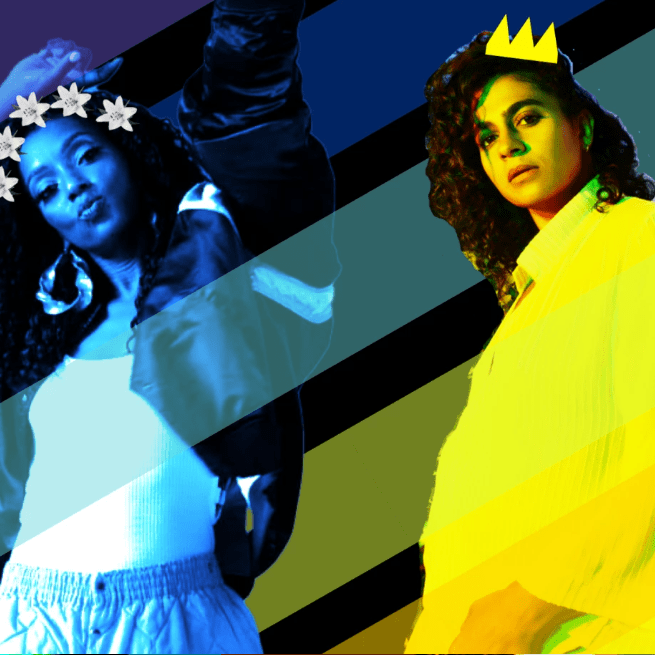
By Myra Flynn

Part One – Listen Here
Fame, or the idea of it, is deeply woven into our society. It’s currency — people knowing you, knowing your name, knowing your art — can be priceless for an artist. Something to spend your whole life seeking. But fame also comes at a cost, and for young women of color in the music industry, those costs have names. They are: financial devastation, mental health challenges, violence and sexual assault. In this two-part episode of Homegoings, we’ll pull back the curtain and hear from three female musicians and an expert about what it means to be ambitious, broke and brown and Black in the music industry.
This is the latest episode of Homegoings, a podcast that features fearless conversations about race, and YOU are welcome here. Follow the series here.
The music industry sends conflicting messages about fame, and how to attain it. Be sexual but not too sexual. It’s all about your talent, but depending on your genre, your image is a big part of that too. Put yourself out there, cover yourself up. Protect yourself while you exploit yourself while you hold your head high.
It’s exhausting — chasing a mirage.
And I’ve always tried to keep my head held high as a Black woman. But before you can be a proud Black woman, you’re a young Black girl. Naive as anyone else, except — the world doesn’t see you that way. In fact, many studies show that, across all age ranges, the world views Black girls collectively as more adult than white girls. The perception, also, is that we need less protection and nurturing than white girls, and we are perceived to know more about sex at a young age. In short: We are not afforded innocence.
So, at the age of 16, when I found myself straddling college and recording studios, I entered the music industry somewhere between a girl and a woman. And that, in America anyway — especially while being Black — is a deliciously vulnerable and enticing space to occupy for predators.
But right now, in 2024, while this episode is dropping into your feed, hip-hop mogul Sean “Diddy” Combs has been hit with five lawsuits in New York accusing him of sexual assault, sexual trafficking and engaging in other criminal activity. Former model Crystal McKinney also filed a lawsuit accusing the rapper of drugging and sexually assaulting her at his New York recording studio in 2003. Cassie Ventura, Diddy’s ex-girlfriend, spoke out after CNN obtained a 2016 video of Combs attacking her in a hotel hallway. Grammy award-winning R&B singer R. Kelly has been sentenced to 30 years in prison on three charges of producing child sexual abuse images and three charges of enticement of minors for sex. Young Black girls and women abused in the music industry are finally a little more seen. A little more heard. A little more welcomed into the conversation of injustice, and humanity.
Which means here on Homegoings, it’s time to hear some stories — and for me, it’s time to finally share some. This episode is part one of a two-part exposé of sorts, as I speak with two female musicians and an expert about what it means to be ambitious, broke and brown and Black in the music industry.
“We are not always being honest on stage, a lot of the time we are faking it. And nobody understands that. And we’re not supposed to let you guys know, that, like, the person we’re sitting next to is an abuser, or a drug addict, or, and now I live with them on the bus. It’s really interesting that as authentic as you think an artist is, we’re just not. Because we can’t afford to be.” – Res
Part One – Listen Here
 Madame Gandhi | BLOG